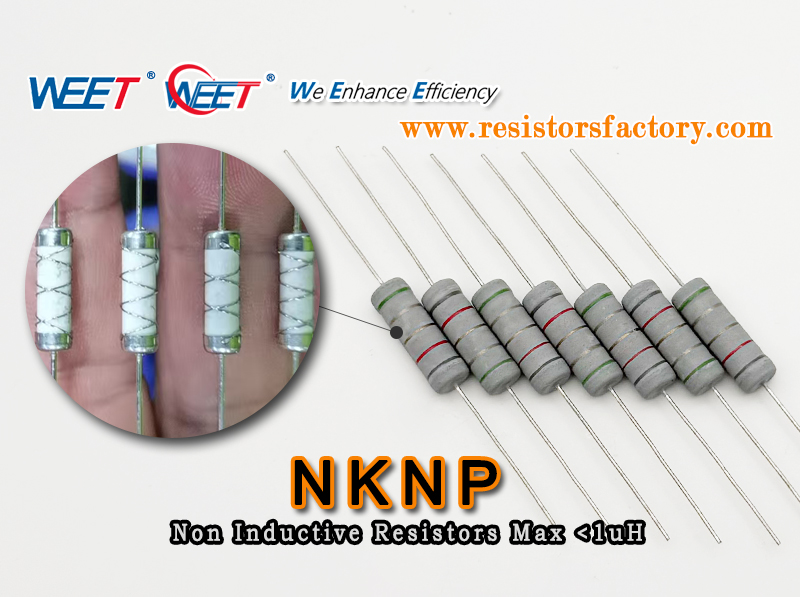
WEET Do You Know What Does a NKNP Non-Inductive Resistor Look Like Inside?
The manufacturing process of non-inductive resistors is extremely complex, and their internal structure is quite different from the external appearance. So, do you know what does a non-inductive resistor look like inside?
INTRODUCTION
The core component inside a non-inductive resistor is an alumina ceramic rod, which boasts excellent heat dissipation performance to ensure the stable operation of the resistor.
As the core part that realizes the resistance function, the resistance wire winding adopts a special winding method to achieve the non-inductive effect, thus greatly reducing the inductive reactance.
After winding the resistance wire around the ceramic rod, basic insulation treatment is first carried out, followed by coating with a non-combustible paint to form a protective layer. This layer not only provides insulation protection for the internal resistance wire and ceramic rod to prevent short circuits, but also enhances the resistor’s heat resistance and moisture resistance, thereby extending its service life.
Finally, as for its two ends, the alumina ceramic rod is equipped with metal caps with copper wires at both ends, which are used to realize the connection between the resistor and the external circuit.
The picture below shows the NKNP non inductive resistors types with a power rating of 10W, a tolerance of 5%, and a resistance value of 8.2Ω.
Note: WEET NKNP non-inductive resistor provide 10W, Max <1uH.